How to Practice

OK. I know. This is an impossibly large topic to cover in one blog post. But as it relates to My Process, there are some cornerstone elements to good practicing I can cover in a normal length blog post. Practicing is where 99% of the effort and progress happens. Lessons are short. Rehearsals are infrequent. Performances are even more infrequent. Practicing happens every day. Those lessons, rehearsals, and performances are where we put the pieces of our work together. If good practice hasn’t happened, there simply aren’t going to be enough pieces to put something meaningful together.

WillPractice

Two weeks ago I talked about how to begin practicing a new work. I believe those first few practice sessions are the most difficult. Once you have some momentum it’s a lot easier to be productive in the practice room. Today I’m going to cover some of my cornerstones of good practice.

The biggest challenge I have with students is shifting their practice goals. Most students think the more hours they spend in the practice room the better they will be. This isn’t always the case. Successful musicians have “Goal Oriented” practice sessions instead of “Total Amount of Time” practice sessions. Focusing on a goal rather than the clock will help you accomplish that goal as quickly as possible. That could be 10 minutes or that could be 4 months. The point isn’t how long it takes, the point is to accomplish that goal. When I am staring at the clock, I find myself distracted and tasks generally take longer. Obviously we all have lives and schedules so ignoring the time isn’t really an option. However that doesn’t mean we have to know what time it is throughout the session. Simply set an alarm clock when you have to be done, and spend that time practicing goals rather than an hour and a half. If you don’t accomplish your goal, you can at least know you were as productive as you possibly could be in the time you had.

When deciding on these goals it is important to understand that some goals will take what I call “Calendar Time” and others will take what I call “Hour Time”. Let me give you some examples to explain what I mean. Your snare drum roll isn’t going to go from Morse code to silky smooth in a day. No matter how many hours you practice. That takes calendar time. Trusting a new technique or feeling really solid memorizing Bach, will take days and days. Thus, they improve over calendar time. Smaller tasks such as learning a small orchestra part or memorizing 32 bars of music can be done in a shorter amount of time. Thus hour time. Understanding the difference between the two will help in establishing realistic goals and keep you from pulling your hair out.

When we get ahead of ourselves and expect success quicker than it most likely will come, we tend to skip over important parts of the process. Skills like learning the snare drum roll take days of practicing isolated exercises so you trust the new technique. If those days are rushed through, your body will not trust the new technique and thus make small mistakes. Which will then have to be corrected (or even worse not corrected) later. The same is true for memorizing a big marimba piece. If the early days of memorization are not at a careful and deliberate pace, the notes will not be truly cemented in your brain. Thus more memory slips and lower confidence in what you are playing.

How many of you have prepared something for a lesson that you thought was ready and then walked in and laid an egg? Who has said “it was fine in the practice room, I just don’t understand why I can’t play it here?” I know I have! Some of that has to do with nerves (which is an entirely different blog post!) but a lot of that has to do with preparation. Often we tend to practice things over and over again until we get them right. When we do this we are practicing warming up with lots of mistakes, and then around the 7th or 8th time we get it right. Well in the real world you don’t get 7 or 8 times through before it really counts. I don’t know who originally said it but I love the quote “Don’t practice until you get it right, practice until you can’t get it wrong.” This is a HUGE difference in philosophy and vitally important in how we practice.

Mile-1

Let’s use the analogy of a marathon to help us understand the pacing of learning a piece. The last post was focusing on those early days in say mile 0 – 2. The researching, the early preparation. Miles 3 – 5 are really an extension of that. You are problem solving. When drilling sections begin to ask yourself if you are happy with your accuracy. Are you happy with your phrasing? Are you happy with your sticking? Will that sticking work at a faster tempo? Are you happy with your sense of style? If not, slow the tempo down and be VERY deliberate about fixing those issues. If need be, practice in slow motion. This slow motion practice can be out of any sort of tempo and can be to simply walk through whatever issues you are trying to solve. DON’T move on until you have fixed the issue. Too many students think that simple repetition will fix problems. This is a lazy attitude. It is much more difficult to really be analytical and tackle the issues but far more efficient. If you realize a sticking probably won’t work when ultimately up to tempo. Stop and walk through options in slow motion. Solve the issue and then find a tempo you can comfortably execute the new sticking.

mile8

Once most issues have been solved, find a tempo at which you can comfortably execute all of your decisions. This is now your working tempo. The goal should be to establish trust and confidence in our decisions. Not moving up in tempo. It can take a LONG time to get to this point and it can take even longer until you are truly ready to move up in tempo. No matter how slow or how fast, this is our starting point. We are at mile 7 or 8 at this point. That’s roughly a third of the way through the entire process! And we have not made any increases in tempo yet. Let that sink in. Roughly a third of the learning process is solving problems and memorization. Most students are not disciplined enough to spend that amount of time on practicing at that slow of a tempo. Because our brains are wired to want success immediately, we all have a tendency to speed up and see what we can do before we are really ready. It’s a natural desire, but one we must fight against.
mile13

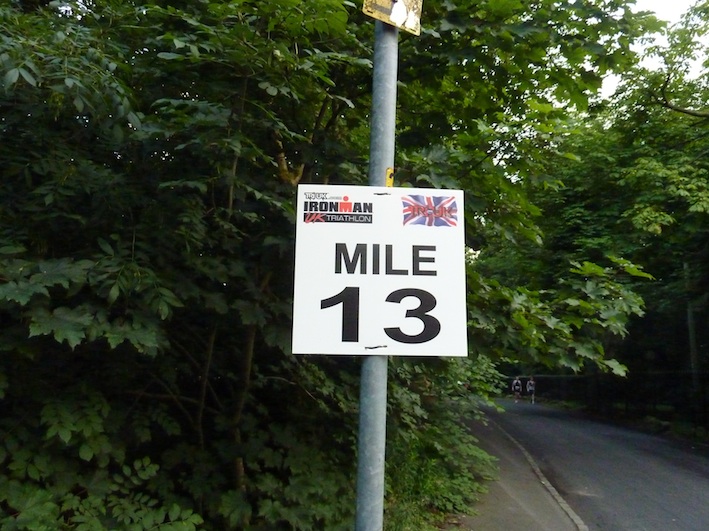
Miles 9 through about 17 are the methodical advancement of tempo towards our ultimate tempo. Let’s say you are at quarter = 45. I want to be so solid and confident in my playing that even before I speed the metronome up to 50, I already know I can do it. This not only helps my accuracy but really helps my confidence in my playing. As I’ve said before success is a learned behavior and having small successes along the way like this build toward even bigger success. As you progress from 50 to 55 and 55 to 60 you should do mini inventories of all those decisions you made early on to make sure they still are working. Perhaps some phrasing needs to change now that you know the piece better? Perhaps the sticking you thought would work, isn’t working and you need to change it? By having this methodical approach, you will be shocked at how much faster this part of the “marathon” goes. Because you did so much good work early on, you will be able to progress much quicker. You will also have fewer mistakes to fix and muscle memory to unlearn. It’s around this point I hear lots of students say “Oh!! Now I get it.”
mile18

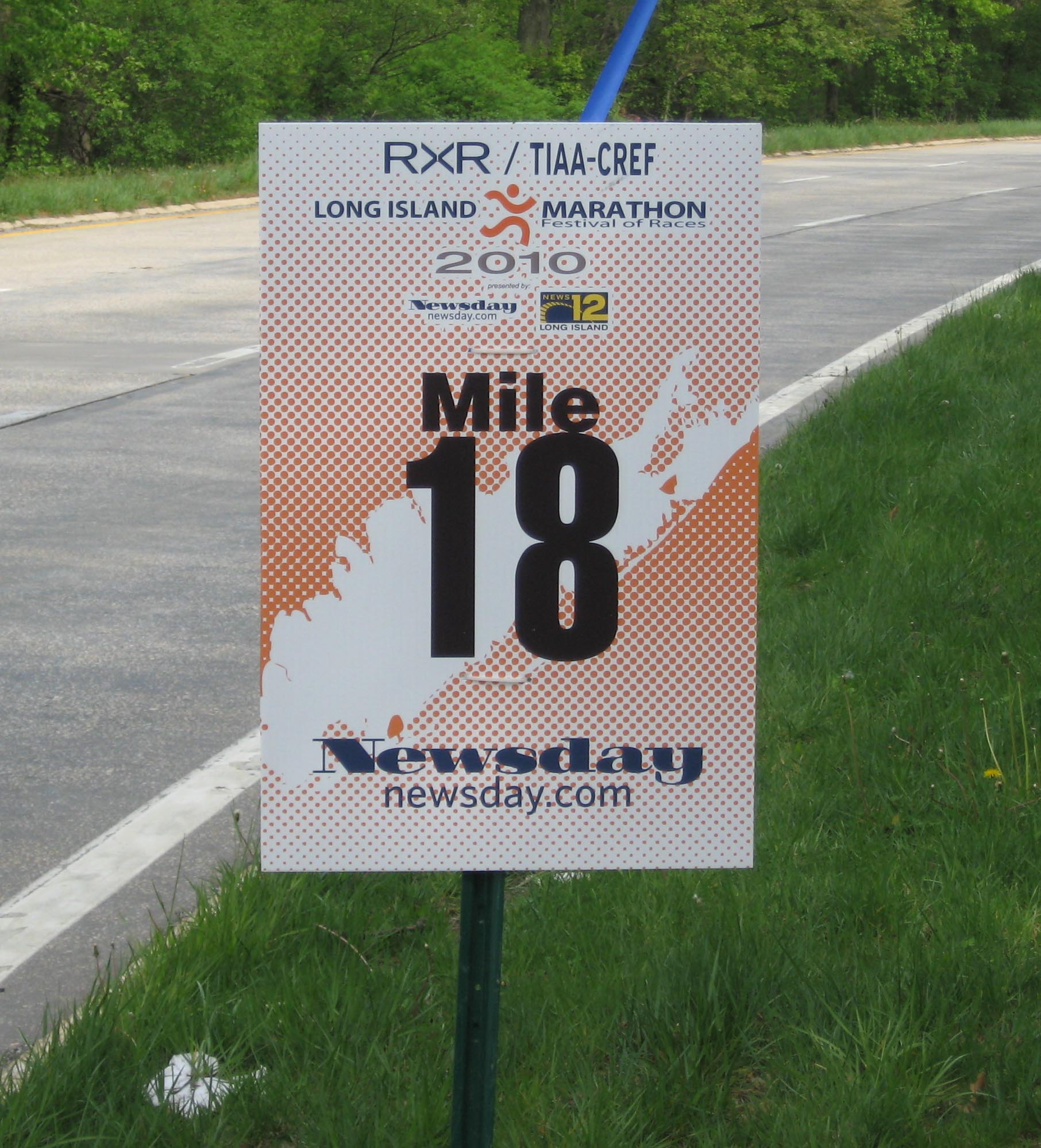
Miles 18 through 23 are when we start switching from practice mode to performance mode. This is the switch from just drilling sections to focusing on performing sections once. Like I said earlier, you don’t get 5 or 6 warm up runs before your performance. You get one shot. When problem solving and working up to tempo you are drilling sections for consistency. Now the job is to be consistent the first time. This shift in focus is really for your brain more so than your hands. I tell students to practice performing once……, a lot. Meaning give yourself one shot at something (without stopping) and when you are done analyze how it went. Then repeat and see if you can improve. This is also a great time to start recording yourself. This sort of pressure will mimic the pressure of performing.

BigSurMileMarker25

Miles 24 through 26 are for fine tuning and playing for people. You know the piece at this point and you are really close to being ready for your performance. Now you just need to get really comfortable playing in front of people and incorporating small bits of advice your colleagues can give you. Whenever I am at this point I always feel so glad I spent all those hours problem solving early on. I have a ton of confidence because I have solidified those decisions over the last 20 or so “miles”. Now is not when I want to be discovering new issues. We are far too late in the game for that. So much work goes into the beginning so that at this point I am just focusing on execution and musical goals.

This learning process is not easy and it can be made even more complicated if you have multiple works to learn at the same time and different performance dates for all of them. That’s our topic for next time! Thanks for the comments and shares on Facebook!

WJ


How to practice when you are “Stuck”

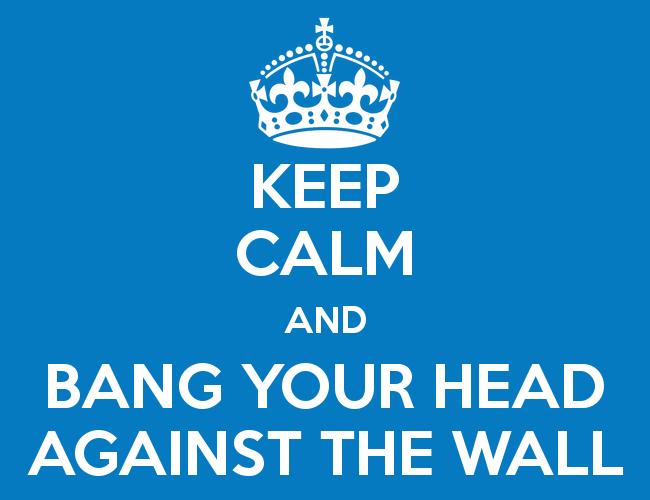
Have you felt “stuck” in your practice sessions? Can’t seem to figure out what the next step is? Raise your hand if you have felt like you are banging your head against the wall when in your practice room. (My hand is raised) Unfortunately we all have felt stuck and unsure of what to do or what to fix. This sickness can have various symptoms. Here are some symptoms I have felt:

bang head here

I’m just totally unsure what to fix

I know what is wrong but don’t know how to fix it.

I don’t know what the next step in the process is.

My brain is fried and I simply don’t know what I am listening to anymore.

My hands simply won’t do what I am asking them to do.


This is beyond frustrating because of the helplessness one feels. If you know exactly what to do, it’s just a matter of doing it, but if you are lost…. Well it can seem impossible to find a solution.

IMAG0135(I can not confirm nor deny if I was involved in this incident…)

Believe it or not there are a number of ways to dig your way back out of the hole. The most important thing to remember when you find yourself stuck is that now of all times is when you must practice smart! It may seem like you are wasting time but the first thing you have to do is step back and really analyze the situation. In lessons when I see a student growing progressively frustrated with something they are trying to accomplish; the first thing I do is ask them to step away from the instrument. They usually give me a half laugh knowing they are frustrated. I tell them to take a deep breath and then try again. Being smart, slow, and methodical is the only way to make progress when you are stuck. To help pinpoint what you are struggling with here are some questions you should ask yourself. Be very honest with your answer…


Is it a technical issue?

Is it a musical issue?

Is it a consistency issue?

Is it a mental focus issue?

Is it a time issue?

Are you just simply so tired that you aren’t capable of practicing well?

Are there multiple interpretations and you are having trouble committing to one?

Could what you are playing actually be sounding great and you are looking for something wrong when there is nothing to be found?


One of the main reasons I see players “stuck” is when they get into a routine and don’t know when or how to move out of it. Routines are great, but we evolve as musicians and sometimes we need to move to new exercises and routines to fix new problems. If your view of your playing is through a very small window, it’s hard to see the solutions that might be lying just outside your focus. Sometimes it’s easy to get a little too comfortable with that you are working on and not realize that it is time to move on. Then, when it really is time to move on, the change is even more uncomfortable. I liken this feeling to beginning practice after some time off. Getting back into a new groove can be tough.

keep-calm-and-bang-your-head-against-the-wall

I also see students commonly get stuck when learning a solo. They feel they are making good progress on learning the notes and working it up to tempo but once they get about %80 of the way there, they get stuck. The solo refuses to get better. There are a variety of reasons this can happen. Sometimes it is a technical deficiency in ones playing that isn’t allowing the player to play the piece the way they want. Sometimes it has taken a student so long to get to the %80 mark that they are simply burned out on the piece and can’t finish the job. The most common reason this can happen is because critical steps were skipped early on in the learning process and they are coming back to haunt the player. These steps are both musical and technical. If the larger musical picture isn’t studied early on, the piece will come together very disjointed and not flow musically. It will take more work in the later stages to get the piece performance ready. It is also very easy to ignore technical issues when the work is slow and new. Students often don’t solve technical issues at the slow tempo and so they arise at the faster tempo. The typical solution to this is just to repeat, repeat, repeat, hoping that it will get better but in reality a larger problem must be solved. Being able to see that you need to take 2 steps back in order to take 4 steps forward is important to mature as a player.


Because it is very easy to get stuck looking at every single “tree” while practicing it is easy to miss the “forest”. For this reason recording yourself and listening back is the best way of analyzing in the practice room. You can pinpoint right where your playing can improve. It can be tough to analyze your playing while actually playing. Listening to a recording immediately after allows your brain to focus solely on listening. It is a way of giving yourself a lesson when it isn’t possible to play for someone else. It is also instant feedback right there in the practice room.


Playing for other people and seeking advice is key to making progress as a musician. Especially when you are stuck! Seeking out teachers, colleagues and other students for advice can be the only way out when your brain refuses to work. Teachers and professionals have years of experience you can draw on. They usually can spot your issue much quicker than you can. However, sometimes your fellow students can be the most helpful because chances are they are going through the same issue you are. They can work through it with you and commiserate through the process.


Occasionally I have seen students stuck in the practice room and the reason is because nothing is actually wrong. What you say?!?! As students and musicians we are trained to constantly be looking for what is wrong and what can be better. That is generally why the world’s best musicians are as good as they are. However, sometimes… Nothing is wrong. I vividly remember playing the Lt. Kije excerpt for Michael Burritt in a lesson once and he said “Play it just like that. That’s pretty good.” I was confused and almost shocked. You mean to tell me something I played didn’t need fixing? Once I got over my shock, I found it very empowering and my confidence grew. The best teachers in the world know when to say “Play it just like that!” rather than continuing to mess with the performance and possibly make it worse. You may find that after a lot of analysis, your performance may be pretty good after all!


Getting stuck in the practice room can be the worst, but this is the time more so than ever to take a step back, be methodical, and practice smart!

WJ

Practice Goals – Hour Time vs. Calendar Time


I find in both my own practice as well as my students, that it is very easy to have unrealistic goals. We all want to build Rome in a day. Wouldn’t that be nice. We might be able to build a few houses in a day, but certainly not the whole city. For this reason, I separate practice goals into two categories for my students. Hour time and Calendar time. Skills that can be learned in hour time are short term goals. Skills that require weeks and months to perfect take calendar time.

clock
Hour time is much easier to manage because we deal with it every day. Reviewing the snare drum part to Prokofiev’s Fifth Symphony won’t take very long. Memorizing the last 20 bars of a solo is something you can accomplish today. Learning a small part for a brass ensemble gig would also fall under hour time. These are all tasks that can be started and completed in a few hours, maybe even one hour. If you are having difficulty completing these tasks in a relatively short period of time then we need to examine your efficiency in the practice room.

Calendar-Generic
Calendar time is the time needed to learn and perfect big goals. It is unrealistic to learn Velocities in a week. This takes calendar time. It is naive to think you can perfect your timpani roll in a few days. Again, it’s going to take a while. Calendar time is unique because it not only takes a lot of hours to learn those concepts, but it also takes space between those hours. This is why I call it calendar time.

I’m sure if I locked you in a room with food and water and said you have a week to learn the notes to Velocities, you might be able to get close. But the experience would be terrible and odds are your memorization would be shaky at best. Now take that same 80 or so hours you spent in one week and spread it over 6 weeks and I bet you will yield a much better result. This is because of two reasons. You were more efficient in those hours and there was more time in between for your mind to literally digest the notes. This is precisely why I look at these larger tasks being accomplished over calendar time rather than hour time.

It is easy to understand big picture vs. small picture but isn’t there some space in between? This is the challenge. Big picture goals, like learning a snare drum roll, takes lots of individual practice sessions in which progress is slowly compounded into a tangible result. To do this, we must break the giant task into small steps. If you are learning a solo, concentrate on small sections. If you are learning a skill, like the snare drum roll, concentrate on isolated elements. The kicker is, not to look at the forest when you are working on the trees. If I’m focusing on keeping my wrist stabilized and not bending during my roll, of course my roll is going to sound terrible. I’m concentrating on a very isolated part of the roll. I don’t have all of the elements put together yet. Once I have all the isolate elements perfected, then I can start to put them together and begin to look at the forest.

The best sports analogy I use for this is my golf swing. I get so frustrated on the golf course because I don’t have a Rory McIlroy swing. I know what I’m supposed to do, but it’s so hard to repeat. It’s totally unrealistic for me to think I’m going to perfect the golf swing in a week or so. Maybe even in a few months. I can isolate small parts of it though and concentrate on one at a time. That is way more realistic. I gotta say though, this music thing is really getting in the way of fixing my golf swing…

A large part of this concept is for our brains. We can only practice one thing at a time and we can only do so much in a day. But when we look into the future or look into the past it is easy to get frustrated when skills are not learned in the time frame we would like. Patience and understanding that certain things take calendar time are important to maintaining our sanity. In my own practice I have found much more success when I slow down and really take my time, trusting that the end result will come.

WJ

I know I’m late finishing up my Technique and Warm-up Series. Thanks for being patient. The travel and vacation has thrown me off but the last two installments will be up in the next two weeks.